Who this is for
Tree Solutions WA is a quote and referral service for tree work in Armadale and the south-east of Perth. If you own or rent a home anywhere from Canning Vale and Gosnells down through Harrisdale and Kelmscott to Byford, and a tree, stump, palm or bamboo stand has become a problem, this site exists to get the right local contractor to your gate and a written price in your hand.
We do not run a crew. The work is carried out by independent tree contractors who work in this part of Perth. What we do is take the details, match the job to a contractor who handles that kind of work, and make sure the quote you get says what it covers.
The corridor is two landscapes
Anyone who has driven Albany Highway from Gosnells to Armadale has seen it: flat suburbs on the left, the Darling Scarp rising on the right. That split decides a lot about tree work here.
On the plain, the newer estates of Harrisdale, Piara Waters, Southern River and Canning Vale sit on grey sand with a high winter water table. Trees in these suburbs are mostly young, planted when the estates were built, but the blocks are small and houses sit close to the boundary. A tree that looked tidy ten years ago can now be over a neighbour's roof or lifting a driveway. Older parts of Gosnells, Thornlie and Maddington have bigger, older trees and wider blocks, and more of them were planted before anyone thought about the house extension that came later.
Toward the scarp, around Kelmscott, the eastern edge of Armadale and the foothills, the ground turns to gravelly loam and clay over rock, the blocks get bigger and steeper, and the trees get older: jarrah, marri, wandoo and flooded gums left standing when the land was subdivided. These are heavy hardwoods, often on a slope above the house, and a lot of them sit within reach of bushland.
South at Byford, the plain is clay rather than sand. It holds water through winter and sets hard in summer, which changes how roots behave and how a stump comes out.
What usually goes wrong
Most of the calls in this area fall into a few patterns:
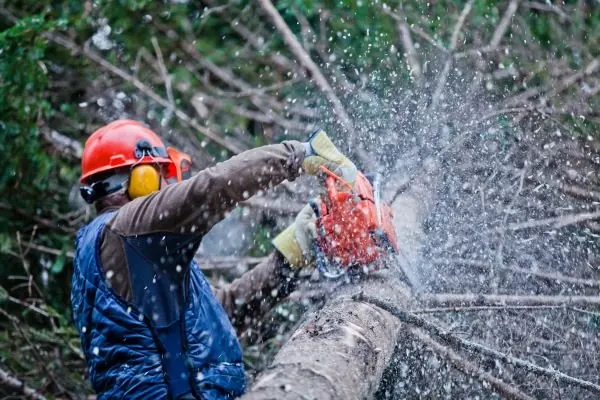
- Winter front damage. The first strong cold fronts of the season find the limbs that have been weakening all summer. Gums drop branches, and trees on waterlogged plain soil can tip over at the root plate.
- Summer limb drop. Large eucalypts sometimes shed a limb on a hot, still day with no wind at all. It is a known habit of the genus, and the reason big gums over driveways and play areas deserve an inspection.
- Outgrown plantings. Fast-growing trees put in for quick shade in the new estates are now too big for the block.
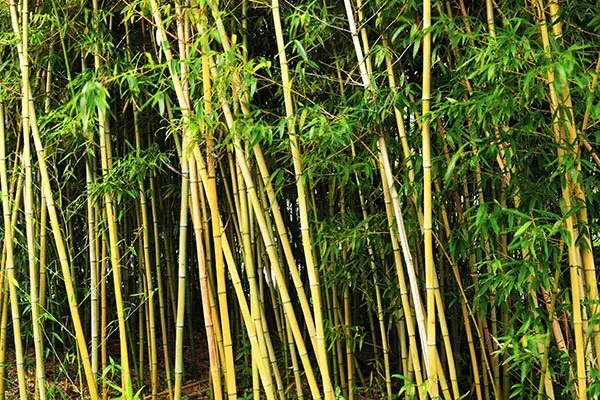
- Palms and bamboo. Both were popular garden choices. Palms drop fronds and seed stalks; running bamboo spreads under fences and paving.
- Fire season preparation. Hills blocks backing onto bush need trees and undergrowth managed around the house before summer.
What happens after you call
- You describe the job. The suburb, the type of tree if you know it, roughly how tall it is against the house, and what sits underneath. A photo of the whole tree and one of the base help a lot.
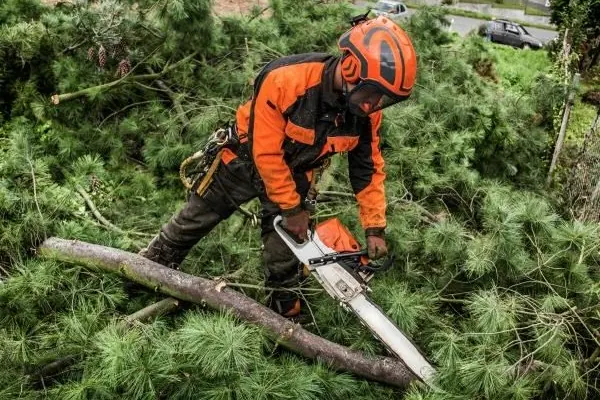
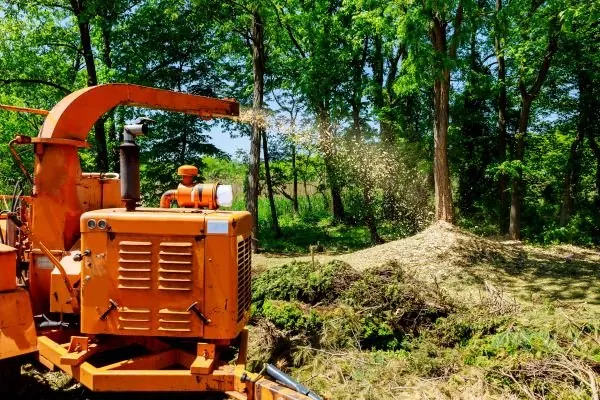
- A contractor looks at it on site. They check the species and condition, the access for a truck, chipper or grinder, where the wood can be dropped or lowered, and any power line running to the house.
- You get a written quote. It should name every tree, say whether stumps are ground and how deep, and say whether the timber and mulch leave the property.
- The work is booked at a time that suits you, and the block is cleaned up before the crew leaves.
Prices for each of the common jobs are on the tree removal cost page, and the services page explains how the five jobs fit together.