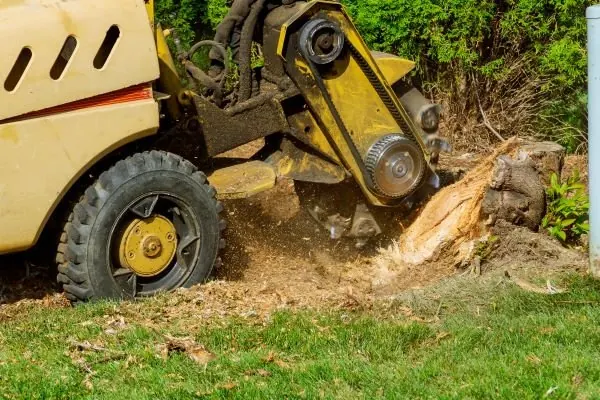
How stump grinding works
A stump grinder is a machine with a heavy cutting wheel fitted with hardened teeth. The operator sweeps the spinning wheel side to side across the stump, lowering it a little each pass, and the wood is chipped away into a pile of grindings. Working steadily, the stump is taken down below the surface of the surrounding ground.
Grinding leaves the deeper root system in place to break down slowly over the years. That is fine for lawns and gardens, and it is the reason grinding is so much quicker, quieter and cheaper than digging a stump out.
Picking the right machine for the access
Grinders range from compact walk-behind units that fit through a side gate to large tracked or towed machines for open verges and acreage. The bigger the machine, the faster it works, but it has to reach the stump without damaging anything on the way.
Measure your narrowest access point before you ring: the gap between the house and the fence, the side gate opening, the space between a meter box and a downpipe. Tell the contractor about steps, a slope, retaining walls or soft ground. In the newer estates of Harrisdale, Piara Waters and Southern River, where houses sit close to both side boundaries, the side path is often the only way in, and the right machine makes the difference between a one-hour job and a half-day one.
What the ground does to the job
Sand on the plain grinds cleanly. The danger is hidden debris: builders' rubble, old bricks or a chunk of concrete from a former path, buried around the base of a tree planted when the estate went in. Grinder teeth do not like concrete.
Clay at Byford and on parts of the Armadale plain is heavy going in winter. A grinder on wet clay can churn the surrounding lawn, so some contractors would rather wait for drier weather.
Gravel and rock on the hills side of Kelmscott and Armadale wear grinder teeth quickly. A stump with stones grown into its base may take longer and need more teeth changed, which can show up in the price.
Old stumps and new ones
A stump from a tree removed last week grinds easily; the wood is still sound and the grinder bites cleanly. Old stumps that have half-rotted can be easier again, but sometimes fungal decay has hollowed them so that soil and stones have washed in, which is harder on the machine.
If you are having a tree removed, ask for the stump grinding on the same quote. The contractor is already on site, and it usually works out cheaper than a separate visit.
Before the grinder arrives
- Mark sprinklers and reticulation lines around the stump. Grinders throw chips and can catch shallow pipes.
- Clear around the stump: pot plants, edging, garden ornaments.
- Keep children and pets indoors while the grinder is running; it throws debris a long way.
- Say what is going on top afterwards so the depth and clean-up match.
Afterwards
When the grinding is done, the hole is filled with grindings or soil, depending on what you agreed. Grindings will settle over the following months, so a spot that is going to be turfed often needs topping up with soil. For the full extraction option, see stump removal. For current planning prices, see the cost guide.